

Last Updated: November 16, 2026
Quick Summary
The best truck side steps for 2026 depend on how you get in and out, whether the step fits your exact cab and year, and how well it handles your conditions. Running boards give a wider standing surface than nerf bars, so they suit frequent entry and exit. Confirm the listing's fitment note against your truck before ordering.
- Running boards offer a wider stepping surface than nerf bars for daily entry and exit.
- Match the listing's fitment note word for word to your year, cab style and trim.
- Steel and aluminum boards differ in weight and finish, so check each listing's material description.
- No-drill and bolt-on boards use existing factory mounting points rather than new holes.
- Torque fasteners to spec and re-check them after the first few hundred miles.
Table of Contents
- Running Boards vs. Nerf Bars: Which Side Step Style Fits Your Truck
- How to Choose Truck Side Steps That Fit Your Truck
- Top Aftermarket Truck Side Steps Compared, Including 2026 F-150 Running Boards
- Installing Your New Side Steps Without Drilling
- Frequently Asked Questions
Choosing the best aftermarket truck side steps for 2026 comes down to three things: how you get in and out, how the step fits your specific truck, and how well it holds up to your conditions. Below we compare the running boards in the Truck Army catalog, explain how running boards differ from nerf bars, and walk through what to check before you buy.
Running Boards vs. Nerf Bars: Which Side Step Style Fits Your Truck
Running boards are flat, wide steps that mount along the rocker panel, giving you a broad surface to stand on. Nerf bars are narrower tubular bars with a more open look. Running boards generally provide more stepping area and more coverage of the lower body, making them a practical choice for daily entry and exit.
Pick based on how you use the truck. If you climb in and out often with passengers or carry gear, a wide board is usually the better fit. Confirm the mounting style and cab configuration before ordering, because the same model name can fit different trucks.
How to Choose Truck Side Steps That Fit Your Truck
Fitment is where most side-step purchases go wrong, so work through it in order before you look at styling.
Step 1: Lock down your truck's exact configuration. Write down year, make, model, cab style (Regular/Standard, Extended/Double, Crew), bed length, and trim. Cab style is a key fitment variable, so confirm it against the listing.
Step 2: Match the listing's fitment note to your configuration. Read the listing's "Fits" line word for word. If it says "Standard Cab only," Crew Cab owners need a different part.
Step 3: Check material and finish against your conditions. Steel and aluminum boards differ in weight and finish. Check each listing's material and finish description against your conditions.
Step 4: Confirm the mounting type and hardware. Look for whether the board is listed as no-drill, bolt-on, or drill-required, and whether mounting brackets and hardware are included. Listings describe no-drill or bolt-on mounting, which uses factory mounting points according to each listing.
Step 5: Check the weight rating and step surface. The listing will state a weight rating where one is published. The TrailFX RBW11B, for example, is listed at 300 pounds. Also check whether step pads are included, since the listings note which boards come without them.
Step 6: Account for ride height and lift. If your truck is lifted, check the listing for any lift-compatibility note and verify clearance at the mounting points.
Step 7: Decide fixed versus powered. The lineup in this article consists of fixed, stationary boards. Each listing describes its design, so check that description for the type you need.
Watch out: a listing that names your truck's model but not your cab style is not confirmation of fitment. Confirm the cab and year before you order.
Once you have your configuration written down, compare it against each listing in the lineup below.
Top Aftermarket Truck Side Steps Compared, Including 2026 F-150 Running Boards
Here is how the running boards compare, based on each product listing:
| Product | Fits (per listing) | Material | Install | Starting Price |
|---|---|---|---|---|
| TrailFX RBW11B | Select Ford F-150 and Super Duty | Steel | No drilling | See product page |
| TrailFX RBW14B | 2019-2025 Ram 1500, Crew Cab | Steel | No drilling | See product page |
| TrailFX RBW20B | Select Chevy Silverado and GMC Sierra, Standard Cab | Steel | No drilling | See product page |
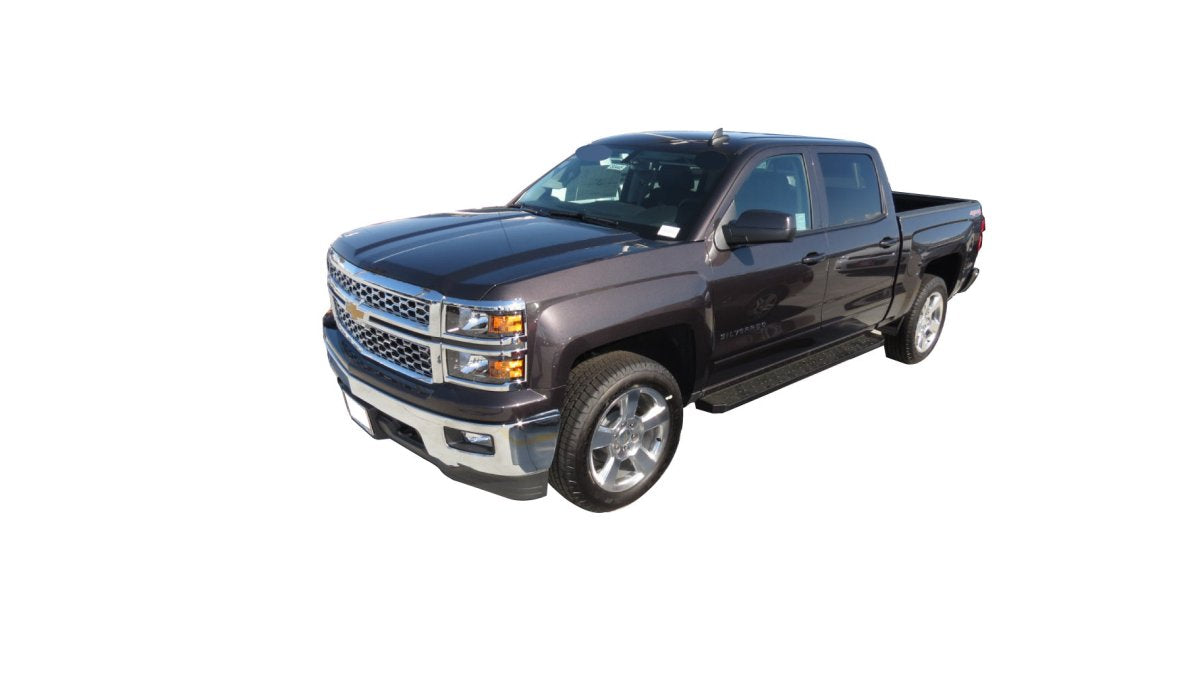
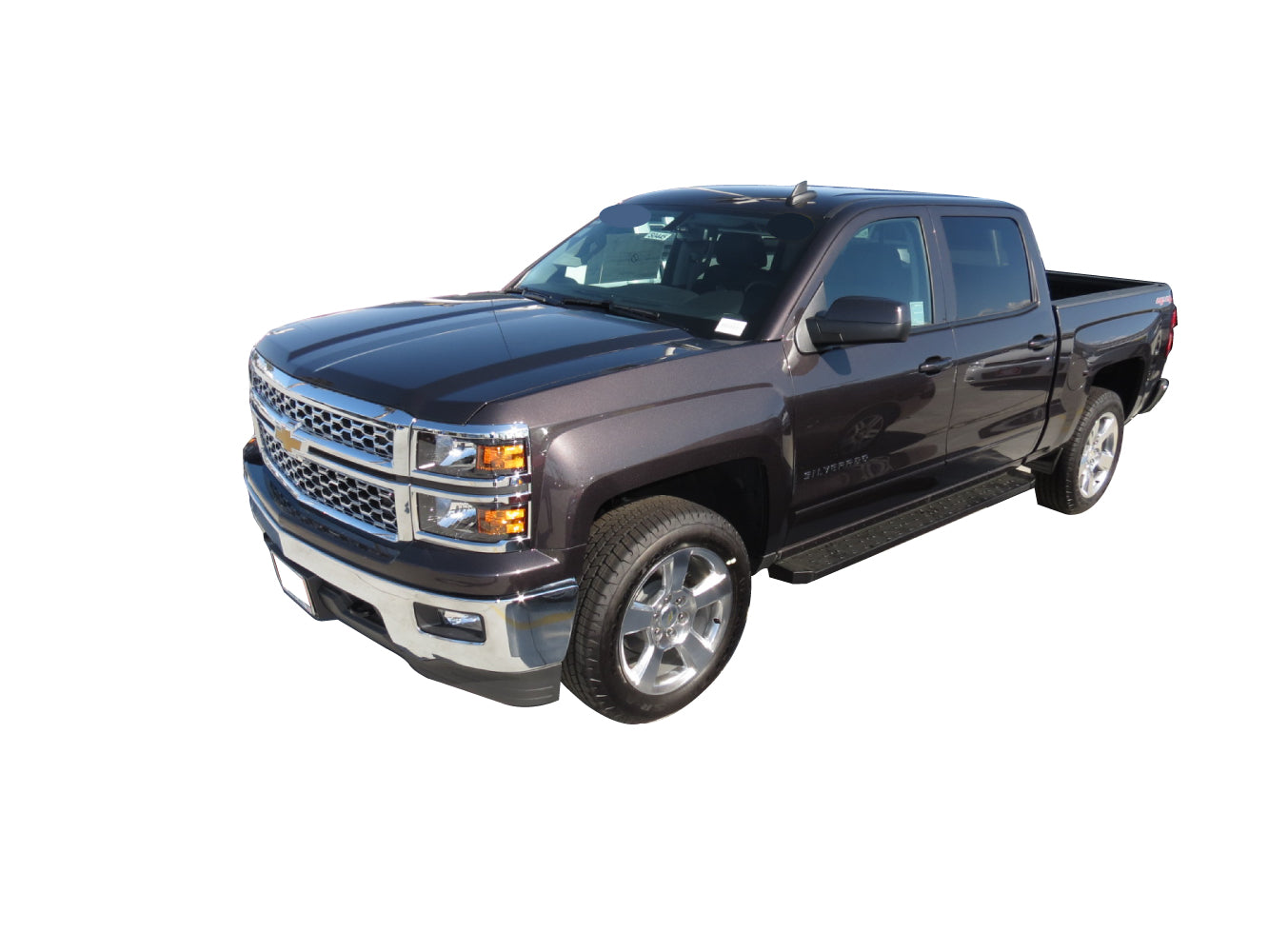
| TrailFX AL6004B | Select Chevy Silverado and GMC Sierra, Crew Cab | Aluminum | No drilling, about 2 hours | See product page |
| TrailFX ORB015 | 2022-2025 Toyota Tundra, Crew Cab | Steel | Bolt-on, no drilling | See product page |
TrailFX RBW11B is a stationary steel board listed for select Ford F-150 and Super Duty applications. Per the listing, it uses a 300-pound weight rating and does not include step pads. Verify your F-150 year and cab before ordering.
TrailFX RBW14B is built for 2019-2025 Ram 1500 Crew Cab trucks. The listing describes a black powder-coated steel deck with included direct-fit brackets.
TrailFX RBW20B fits select Chevy Silverado and GMC Sierra Standard Cab pickups. It is listed for Standard Cab only, so Crew Cab owners should look elsewhere.
TrailFX AL6004B is an aluminum option for select Silverado and Sierra Crew Cab models. The listing gives an estimated install time of about two hours.
TrailFX ORB015 is a bolt-on overland board for 2022-2025 Toyota Tundra Crew Cab trucks, mounting to factory frame points without drilling.
Ready to compare the full lineup? Shop All Running Boards and check each listing against your truck.
Installing Your New Side Steps Without Drilling
No-drill and bolt-on boards are the most DIY-friendly side-step installs because they use existing factory frame or rocker points instead of cutting new holes. The tools, time, and steps vary by board and by truck, so treat the product's installation instructions as the authority and use this as the planning framework.
Tools to have on hand. A basic metric and SAE socket set, a torque wrench, a trim removal tool if the instructions call for pulling rocker clips, and a jack or stands if the instructions require supporting the board during alignment.
Typical no-drill install sequence. Most bolt-on boards follow the same pattern: identify the factory mounting points along the rocker or frame, attach the brackets, hang the board, align it front to back and level it, then torque the fasteners to spec.
Time expectations. Install time varies by board and truck. The TrailFX AL6004B listing gives an estimated install time of about two hours for select Silverado and Sierra Crew Cab applications.
Wiring considerations for powered boards. If you are installing a powered or retractable step, plan for wiring in addition to the mechanical mount: routing a harness from the step motor to a control module, tying into a door-ajar or door-open signal, and finding a fused power source.
Warranty implications. Whether a DIY install affects warranty coverage depends on the product's warranty terms and on what the install touches. A bolt-on board that uses factory points and does not modify the truck is the lowest-risk case.
Post-install checks. After torquing, open and close every door through its full swing to confirm no contact, stand on each step to check for flex or movement, and re-check fastener torque after the first few hundred miles.
Watch out: do not skip the torque spec and do not guess at wiring colors.
If you would rather compare boards before you commit to an install plan, Shop All Running Boards and check each listing's fitment and install notes against your truck.
Frequently Asked Questions
Which truck side steps are best rated?
Ratings depend on your truck and how you use it, so start with fitment and build quality rather than a single top score. The TrailFX running boards in this lineup are steel or aluminum, rated for up to 300 pounds per the listings, and come with mounting hardware. Check that the cab style and model year in the listing match your truck before ordering. For high-use work trucks, the steel boards with e-coat and powder-coat finishes are a reasonable starting point, while aluminum options suit owners who want lighter weight and a flat stepping surface.
What are the best side steps for an F-150?
For a 2015-2018 Ford F-150, the TrailFX RBW11B is listed as fitting select models in that range, per the product listing. Its steel construction is 14-gauge with a black powder-coated finish, and it is a no-drill, bolt-on design with mounting hardware included. Confirm your exact year, cab, and configuration in the listing before buying, since fitment varies. Owners looking for a 2026 F-150 should verify fitment directly, because the listing is not written for that model year.
Are running boards or nerf bars better for a truck?
Running boards offer a wider, flatter stepping surface and run along the rocker panel, which many owners prefer for entry and exit. Nerf bars are narrower tubes that add a step point and sometimes more protection at bumper height. Neither is universally better. Choose running boards if you want a broad step and rocker coverage, and choose nerf bars if you want a slimmer look and a basic step. Always check fitment for your specific cab and model year.
