

Quick Summary
To verify your truck bed length, close the tailgate and measure the floor from the inside of the front bulkhead to the inside face of the tailgate, in inches. Measure inside the bed rails, since that is the usable length accessory listings use. Then match that number to the product's stated bed length, and confirm the year, make, model, and cab style.
- Close the tailgate and measure at floor level, not along the rails.
- Measure inside the bed rails for the true usable floor length.
- Record the measurement in inches before comparing listings.
- Measure at two spots to catch an aftermarket liner or damaged bulkhead.
- Confirm year, make, model, and cab style alongside bed length.
Table of Contents
- Why Verifying Truck Bed Length Matters Before You Buy
- How to Measure Truck Bed Length Step by Step
- Truck Bed Length by Make and Model
- How to Find Your Truck Bed Size by VIN
- Matching Tonneau Cover Fitment to Your Truck Bed Size
- Truck Army Tech Tip and Common Bed Length Questions
- Confirm Your Bed Length Before Shopping for a Tonneau Cover
- Frequently Asked Questions
How to Verify Truck Bed Length Before You Buy Accessories
Last Updated: November 15, 2026
Buying a tonneau cover, toolbox, or bed rack that doesn't fit is a frustrating, expensive mistake. Verifying your truck bed length before you buy is the fastest way to avoid it. Measure once, match your exact truck, and then shop with confidence.
Why Verifying Truck Bed Length Matters Before You Buy
Bed length is the number accessory makers use to decide what fits. A "5-foot bed" and a "6.5-foot bed" need completely different covers, and a cover built for one will not sit correctly on the other. Even two trucks from the same year can differ depending on cab style and configuration.
Verifying your bed length first helps you avoid three common problems:
- Wasted money on returns and restocking
- Wasted time waiting for a part that won't mount
- Gaps or rattles from a cover that almost fits
Tonneau covers are sensitive to fit. Small measurement errors can leave a cover loose, crooked, or unable to close. Checking your bed length takes about ten minutes and saves a lot of frustration later.
How to Measure Truck Bed Length Step by Step
You only need a tape measure and a few minutes. Follow these steps to get an accurate number.
- Close the tailgate. Make sure it sits flush and fully latched.
- Start at the inside of the front bulkhead. This is the wall where the bed meets the cab.
- Run the tape to the inside face of the tailgate. Keep the tape flat along the bed floor, not up the side.
- Record the number in inches. Measure at the floor level, not at the top of the rails.
- Compare to standard sizes. Your exact number matters more than the marketing name.
Write the number down before you shop. Accessory listings usually state the bed length they fit, so you can match your measurement directly.
Measuring Inside the Bed Rails Versus Outside
Where you measure matters. Inside the bed rails gives you the true usable floor length, and that is the number most accessories use. Outside measurements include the thickness of the rails and bumpers, which can make your bed look a few inches longer than it is.
Use the inside measurement when you compare bed length to a product listing. Use the outside measurement only if you're checking clearance for something that mounts on the exterior, like a rack or a side-mounted box.
Common Measuring Mistakes to Avoid
- Measuring the outside of the tailgate. This adds the tailgate thickness and throws off the number.
- Measuring with the tailgate down. Your reading will be too long.
- Measuring along the rail. Keep the tape on the bed floor for an accurate reading.
- Assuming all trucks of one model match. Cab size and bed option can change the length.
- Rounding too early. Keep fractions of an inch until you compare against a listing.
Truck Bed Length by Make and Model
Bed lengths vary by manufacturer, year, and trim. The table below gives general guidance for common full-size and midsize trucks. Always confirm against your own measurement and the product listing, because configurations change from year to year.
| Make and Model | Notes |
|---|---|
| Ford F-150 | Bed length varies by SuperCrew, SuperCab, and Regular Cab |
| Ram 1500 | Some model years use different bed designs |
| Chevrolet Silverado 1500 | Standard and long bed options |
| GMC Sierra 1500 | Shares dimensions with the Silverado |
| Toyota Tacoma | Tacoma beds are shorter than full-size trucks |
| Toyota Tundra | Confirm your cab and bed combination |
If your truck is a different make, model, or year, check the manufacturer's specifications or measure directly. Don't rely on a general number when fitment matters.
How to Find Your Truck Bed Size by VIN
A VIN is the fastest way to confirm what your truck left the factory with, but it is not a bed-length lookup by itself. The 17-character VIN encodes the model year, plant, series, body style, and cab/bed configuration in specific positions, and the bed length is usually implied by the cab-and-bed combination rather than printed as a standalone number. That is why the VIN is a cross-check, not a replacement for your tape measure.
Where to Find the VIN
- Driver's side of the dashboard, visible through the windshield
- Driver's door jamb sticker (certification label)
- Vehicle registration and insurance documents
- The frame stamp, on some trucks
What the VIN Actually Tells You
| VIN Position | What It Encodes | Why It Matters for Bed Length |
|---|---|---|
| 1-3 | World Manufacturer Identifier | Confirms make and where it was built |
| 4-8 | Vehicle attributes (series, body, engine, restraint) | Body style and series narrow the cab/bed combinations |
| 9 | Check digit | Validates the VIN is legitimate |
| 10 | Model year | Bed options change by year, so this matters |
| 11 | Plant code | Confirms assembly location |
| 12-17 | Sequential production number | Unique identifier only |
How to Decode It
- Write down all 17 characters. Double-check letters that look like numbers (I/1, O/0, S/5).
- Use the manufacturer's own VIN decoder or build sheet tool. Ford, Ram, Chevrolet, GMC, Toyota, and Nissan all publish VIN lookup tools, and a dealer parts counter can pull a build sheet from the VIN.
- Read the door jamb sticker. It lists the wheelbase, which is the cleanest cross-check. A given wheelbase maps to a specific cab-and-bed combination on most trucks, so if the wheelbase matches a known short-bed configuration, your bed length is confirmed.
- Compare the decoded cab/bed combo to your tape measurement. If they disagree, the truck may have been modified, or the bed may have been swapped.
Watch out: a VIN decoder that only returns year, make, and model is not enough, you need the body style and series, or the wheelbase from the door jamb, to pin down bed length.
When the VIN and Tape Measure Disagree
Trust the tape measure for fitment. A bed swap, a flatbed conversion, a chassis-cab build, or an aftermarket bed extension will all make the VIN's original configuration wrong for your current truck. Measure the bed you actually have, then use the VIN only to confirm the cab style and year that accessory listings ask for.
What to Have Ready Before You Shop
- VIN (for year, cab, and series confirmation)
- Wheelbase from the door jamb sticker
- Your inside-the-bed measurement in inches
- Cab style (Regular, Extended/SuperCab, Crew/SuperCrew)
With those four items, you can match almost any tonneau cover, bed rack, or toolbox listing without guessing. If a listing asks for a configuration you cannot confirm, contact our truck specialists before you order.
Matching Tonneau Cover Fitment to Your Truck Bed Size
Bed length is the first filter, but it is not the only one. Two trucks with the same bed length can still need different covers because of rail configuration, bed liner, tailgate design, and the accessories already mounted in the bed. Run this fitment check before you compare listings.
The Five Fitment Checks Beyond Bed Length
- Bed rail type. Covers clamp to the top of the bed rails. Trucks with factory rail caps, track systems (like cargo management rails), or stake-pocket rails may need a specific mounting style. A clamp-on cover that assumes a bare rail can sit loose on a truck with a track system.
- Bed liner. A drop-in liner that wraps over the rail changes the rail height and thickness. Spray-in liners usually do not, but a thick spray-in near the rail edge can still affect clamp seating. Measure rail width with the liner in place.
- Tailgate design. A standard latch tailgate, a power tailgate, and a multi-position tailgate all interact differently with a cover's rear seal. Power tailgates in particular can conflict with a cover that relies on the tailgate for its rear weather seal.
- Existing bed accessories. Bed racks, toolboxes, tie-down tracks, and bed extenders can block the rails a cover needs. A toolbox that sits over the rails will prevent most folding and roll-up covers from mounting.
- Cab and bed configuration. Crew cab short bed and regular cab long bed are different part numbers even on the same model year. Confirm the cab style the listing asks for, not just the bed length.
Compatibility Quick Reference
| Bed Accessory | Typical Conflict With Covers | What to Check |
|---|---|---|
| Drop-in bed liner | Rail height and thickness change clamp fit | Measure rail width with liner installed |
| Spray-in liner | Usually fine; thick edges can affect clamps | Inspect rail edge thickness |
| Bed rack / ladder rack | Blocks rails or requires specific mounting | Confirm cover and rack can share rails |
| Over-rail toolbox | Prevents most folding and roll-up covers | Consider a low-profile or rail-mounted box |
| Tie-down tracks | Can interfere with clamp placement | Check clamp locations against track |
| Power tailgate | Can conflict with rear seal design | Confirm cover works with power tailgate |
How to Match a Listing to Your Truck
- Confirm year, make, model, and cab style against the listing title.
- Confirm bed length against the listing's stated bed size, using your inside measurement.
- Read the fitment notes for rail type, liner, and tailgate requirements.
- Check the mounting method, clamp-on, drill, or track-mounted, against your rails.
- Confirm accessory compatibility if you already run a rack, toolbox, or track system.
Truck Army Options by Bed Length
These Truck Army covers are listed for specific trucks and bed lengths. Confirm your exact year, make, model, cab, and bed length against each listing before you order.
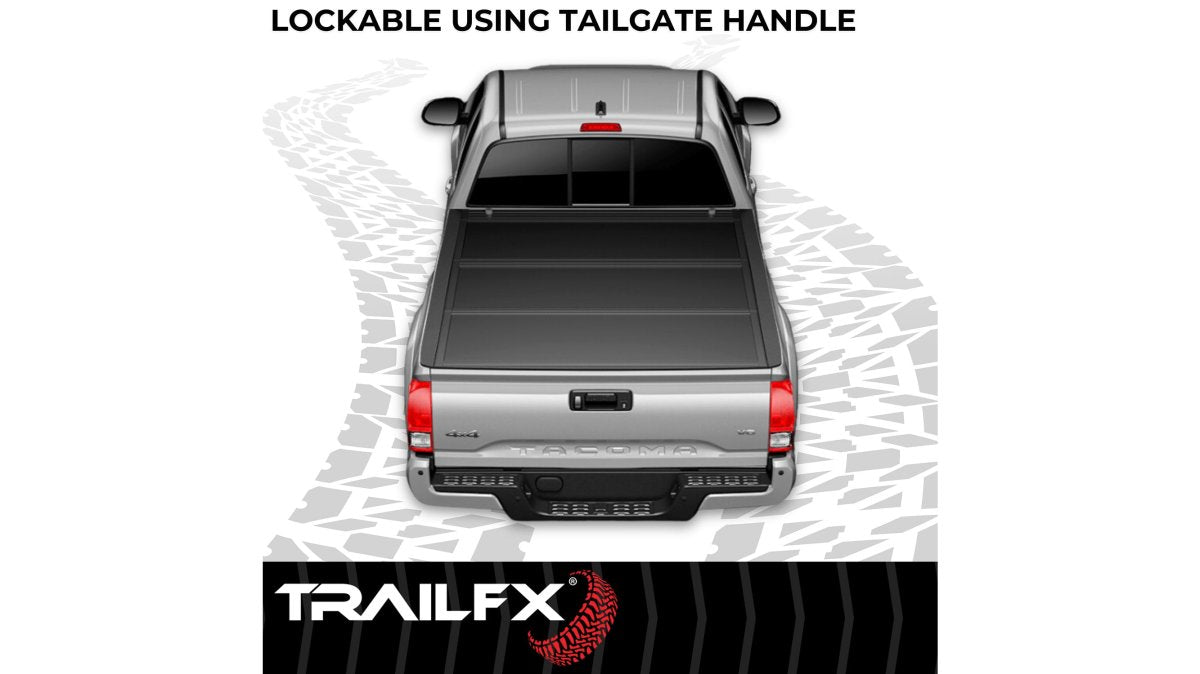
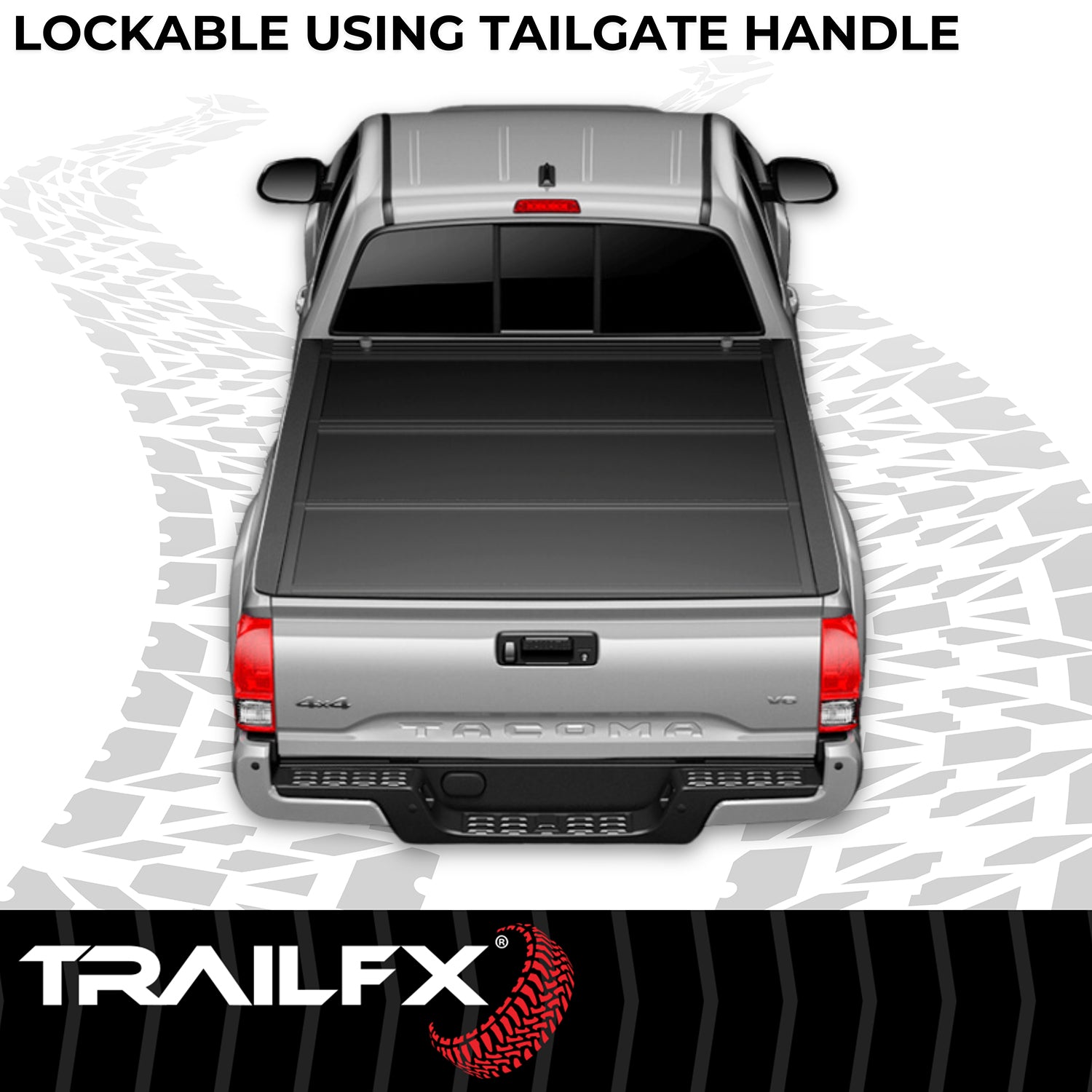
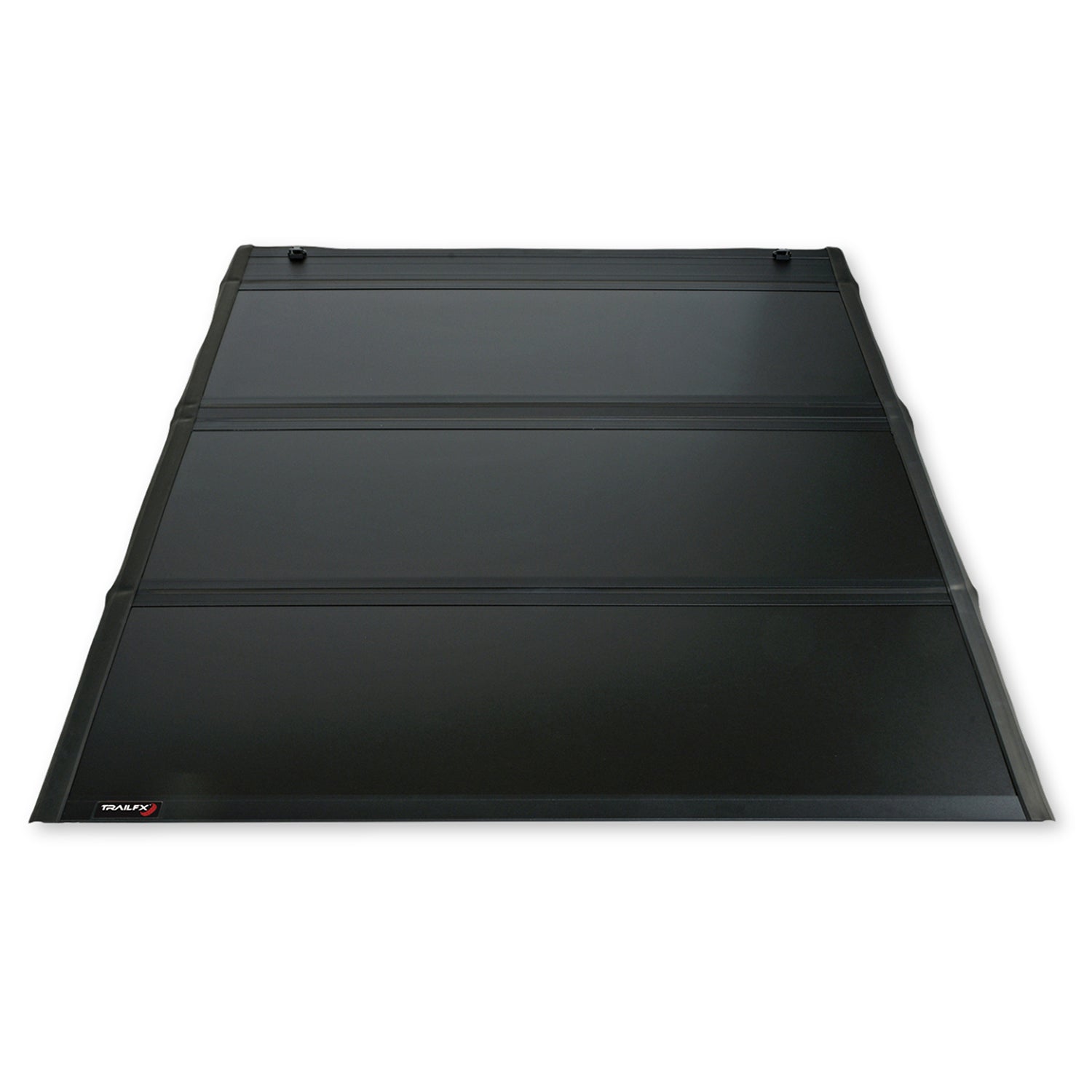
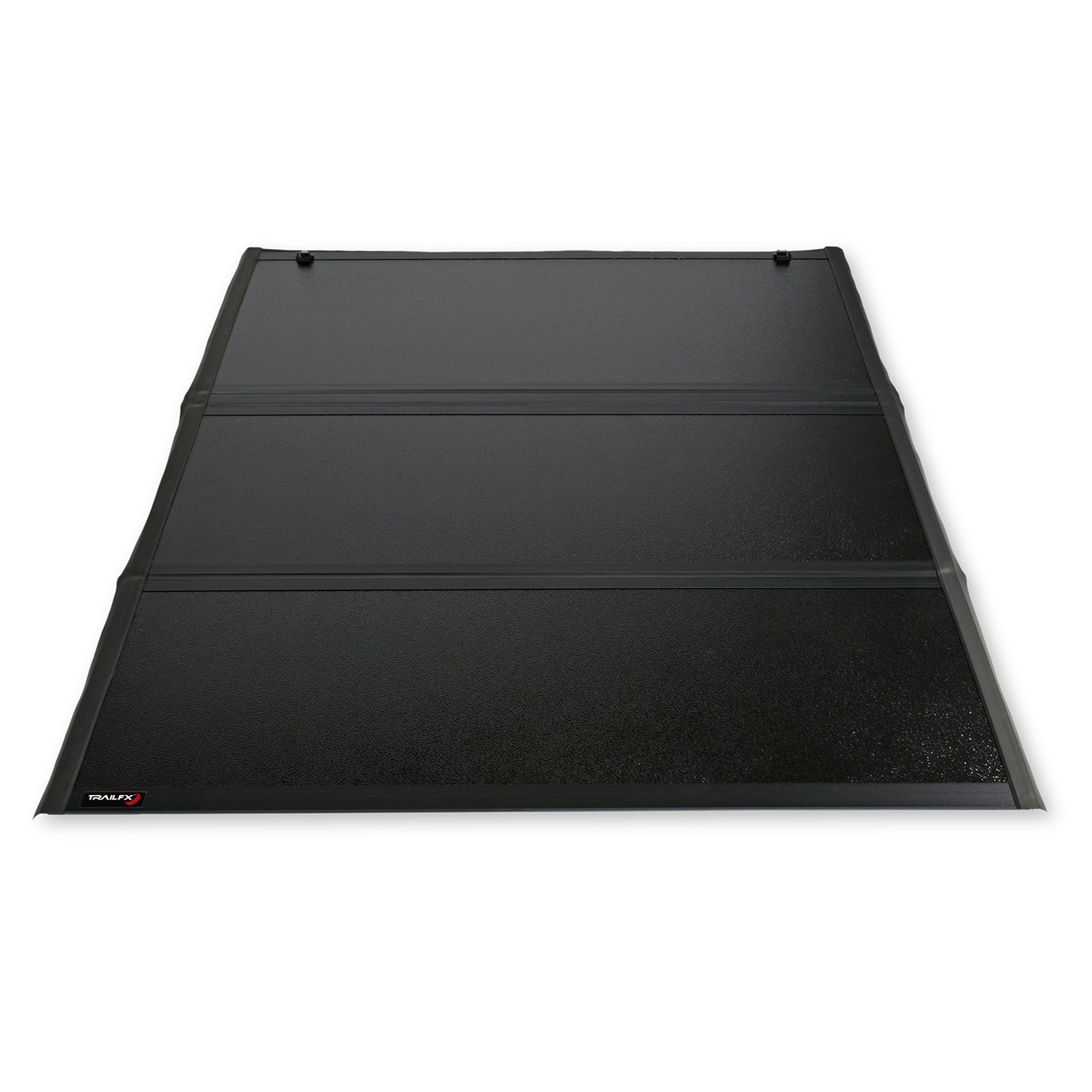
- The TrailFX TFX5706 Hard Tri-Fold Tonneau Cover for 2016-2023 Toyota Tacoma is listed for the 5-foot Tacoma bed, per the listing.
- The TrailFX TFX5708 Hard Tri-Fold Tonneau Cover for 2022-2024 Toyota Tundra is listed for the 5'7" Tundra bed, per the listing.
- The TrailFX TFX3530 Hard Tri-Fold Tonneau Cover for 2021-2025 Ford F-150 is listed for the 6'7" F-150 bed, per the listing.
- The TrailFX TFX2003 Soft Tri-Fold Tonneau Cover for Select Ram Truck Beds is listed for select Ram beds in the 8-foot and 8'2" lengths, per the listing.
If your bed length, rail type, or tailgate design does not match a listing exactly, do not guess. Contact our truck specialists before you buy, and browse the full tonneau covers collection to compare styles.
Truck Army Tech Tip and Common Bed Length Questions
Truck Army Tech Tip: Measure twice, and measure at two spots: once at the floor near the cab and once near the tailgate. If the two numbers differ noticeably, the bed may have an aftermarket liner or a damaged bulkhead, and that can affect how a cover seats. Note both readings before you shop.
Does bed length change by model year? Yes. Manufacturers sometimes change bed dimensions or offer new bed options from one year to the next, so always match the year along with the make and model.
Is an 8-foot bed the same as a long bed? Usually, yes, but the exact dimension depends on the truck. Measure your bed instead of relying on the name.
Does a crew cab have a shorter bed? Typically, yes. Crew cabs often pair with shorter beds to keep the overall truck length manageable, so the same model can have different bed lengths by cab style.
Can I use a cover from a different bed length? Generally no. Covers are designed for specific lengths, and a mismatch leaves gaps or prevents mounting.
Confirm Your Bed Length Before Shopping for a Tonneau Cover
Before you add anything to your cart, run through this checklist:
- Measure your bed floor from the inside of the bulkhead to the inside of the tailgate
- Confirm your truck's year, make, model, and cab style
- Compare your measurement against the product listing's stated bed length
- Check that the listing matches your exact year and model
- Ask a Truck Army specialist if anything is unclear
Verifying your bed length takes minutes and prevents costly returns. Once you know your number, you can shop with confidence and get a cover that fits the first time.
Frequently Asked Questions
Do bed length numbers from manufacturers match the exact measured length?
Not always. Advertised bed lengths are nominal figures that describe a standard bed size, and the measured length can differ slightly depending on whether you measure inside the bed, at the floor, or at the rails, and whether the tailgate is open or closed. For accessory fitment, measure your own truck rather than relying only on the advertised number. Compare your measurement against the product listing's bed length and confirm the exact fitment for your year, make, model and cab configuration before ordering.
How do bed lengths vary by model year?
Bed lengths can change between model years, redesigns and trim levels, even within the same nameplate. A truck that used a 6-foot-6-inch bed one year may offer a 5-foot-7-inch bed in a later generation. Cab configuration, such as regular, extended or crew cab, also affects the bed size you have. Check your specific model year and configuration, and verify the bed length in the product listing against your own measurement.
Does the tailgate position change the measurement?
Yes. Measure with the tailgate closed for the length that matters to most cover and accessory fitment, since the cover sits in the bed with the tailgate in its normal position. Measuring with the tailgate down adds the length of the tailgate opening and can give you a number that does not match the product's listed fitment. Note which method you used whenever you compare measurements.
Can I use my VIN to confirm my bed length?
A VIN identifies your truck's year, make, model, body style and factory equipment, which can help you narrow down the bed size that was originally installed. It is a useful starting point, but it does not replace measuring the bed yourself, especially if the bed has been modified or replaced. Use the VIN to confirm the configuration, then verify with a tape measure and the fitment details in the product listing.
