

Quick Summary
A lift kit changes the angles your suspension was engineered to hold, so alignment almost always shifts after installation. Camber, caster, and toe can all move, and the amount depends on the kit type, with leveling kits causing smaller changes than larger suspension lifts. A lift kit alignment check after installation, plus a recheck after the suspension settles, helps protect your tires and steering.
- Leveling kits usually cause smaller camber and toe shifts than larger suspension lifts.
- Body lifts do not change suspension or steering geometry, so alignment is generally unaffected.
- Ask for before-and-after camber, caster, and toe printouts from your alignment shop.
- Recheck alignment after the suspension settles, typically after a few hundred miles.
- Pulling, wandering, or off-center steering after a lift is a reason to get the truck checked soon.
Table of Contents
- How a Lift Kit Changes Suspension and Steering Geometry
- Why Ride Height Changes Affect Wheel Alignment
- Camber, Caster, and Toe Changes After a Lift
- Handling Symptoms to Watch for After Installation
- Lift Kit Tire Wear and Why Alignment Matters for Tire Life
- Booking Your Post-Lift Alignment and Next Steps for Your Rig
- Frequently Asked Questions
7 Ways Lift Kits Change Truck Alignment and Handling
Last Updated: November 19, 2026
How a Lift Kit Changes Suspension and Steering Geometry
A lift kit changes the angles your front suspension was engineered to hold. Raising the truck moves the control arms, ball joints, and steering linkage into new positions, shifting the geometry that keeps tires pointed straight and tracking true.
Stock suspension is designed around a specific ride height. Raise it, and the factory geometry no longer matches.
For example, the Fabtech K1129M 3.5-Inch Lift Kit with Uniball Upper Control Arms is listed for 2019-2023 Chevrolet Silverado 1500 and GMC Sierra 1500 models. To see what a lift kit's suspension components look like, view the Fabtech K1129M 3.5-Inch Lift Kit on our site.
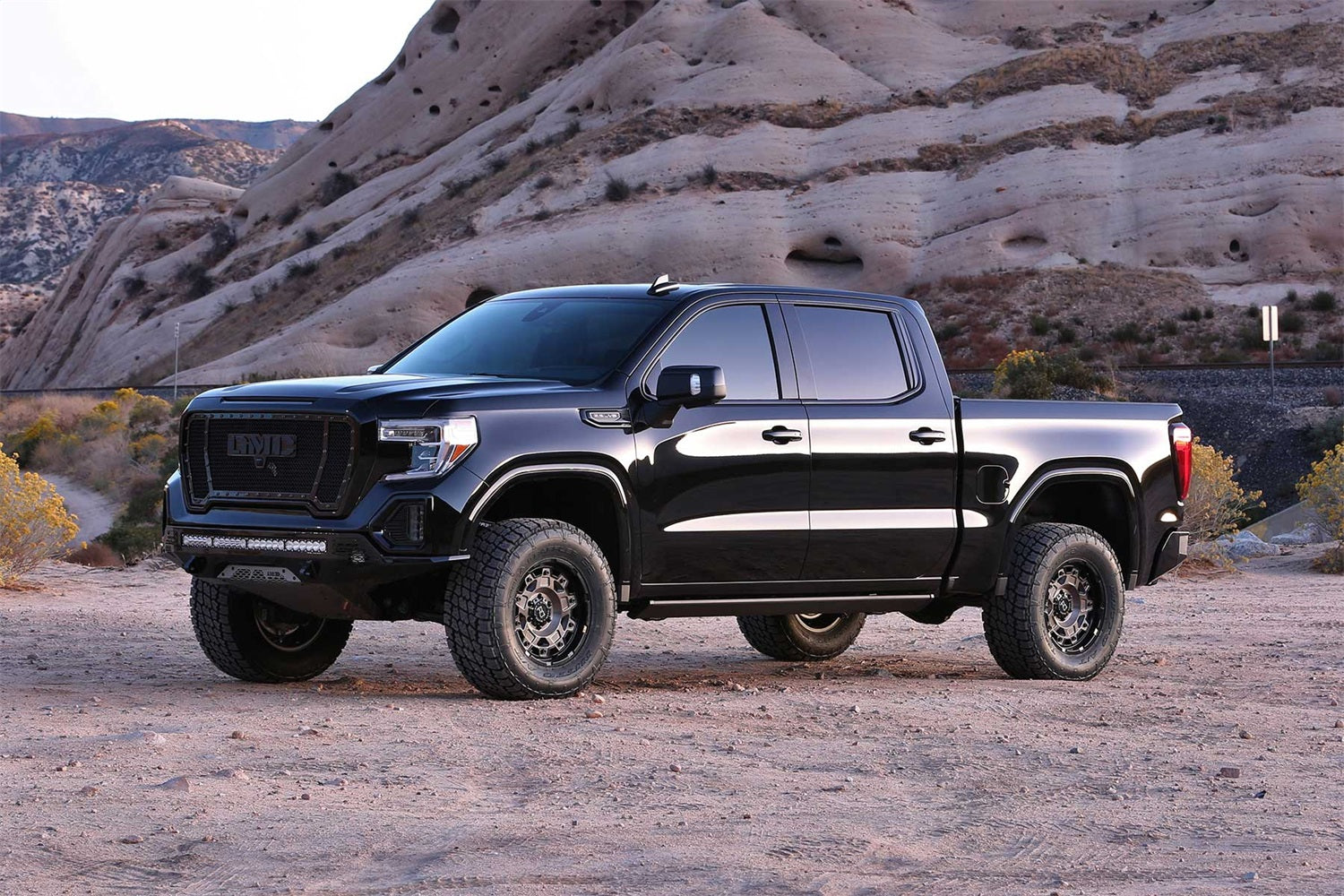
Watch out: Fitment varies by year, cab, and trim. Always confirm the kit matches your exact truck before you order.
Why Ride Height Changes Affect Wheel Alignment
Wheel alignment is a set of angles measured between the wheels, suspension pivots, and road. Raising ride height rotates the suspension links through their travel, so every angle moves.
Here is the practical breakdown by kit type:
| Kit type | What it changes | Typical alignment effect |
|---|---|---|
| Leveling kit (spacer or strut) | Front ride height only, usually 1.5 to 2.5 inches | Small camber and toe shift; caster changes modestly; often alignable within factory range on many trucks |
| Drop-bracket suspension lift | Front and rear height via relocated brackets and new knuckles | Larger camber and caster swing; bracket geometry is designed to bring angles back toward spec, but final numbers still need an alignment |
| Coilover or strut-extension lift | Front height via preload or longer struts | Camber moves negative as the arm swings down; caster can go either way depending on arm length |
| Body lift | Separates body from frame only | No change to suspension or steering geometry, so alignment is generally unaffected |
That's why "get an alignment after a lift" is incomplete advice.
Suspension design matters just as much.
Toe is the angle most likely to be wrong right after installation because tie rods get disturbed during the job. Even a small toe error scrubs tread quickly, which is why a full four-wheel alignment beats a quick tape-measure toe set.
Watch out: Ask what the before-and-after numbers are and whether any angle is sitting at the edge of its adjustment range.
Camber, Caster, and Toe Changes After a Lift
Camber after a lift
Camber often moves toward negative after a lift. Negative camber means the top of the tire leans in. Too much of it wears the inside edge of the tire faster.
Caster after a lift
Caster can shift in either direction depending on the kit. Caster affects straight-line stability and how the steering returns to center after a turn.
Toe after a lift
Toe is the easiest angle to check, and the one most often wrong after a lift. Even a small toe error can scrub tread off the front tires quickly.
Pro tip: Ask your alignment shop for printed before-and-after numbers. That gives you a clear record of what changed and what was corrected.
Handling Symptoms to Watch for After Installation
A poorly aligned lifted truck usually shows signs early. Pay attention to these common handling symptoms:
- Steering wheel off-center when driving straight
- The truck pulling to one side on flat roads
- Wandering or vague steering on the highway
- Steering that feels loose or slow to respond
- Vibration or shimmy at certain speeds
Watch out: A noticeable pull or wander is a reason to get the truck checked soon. Driving on a misaligned front end can damage tires and steering parts.
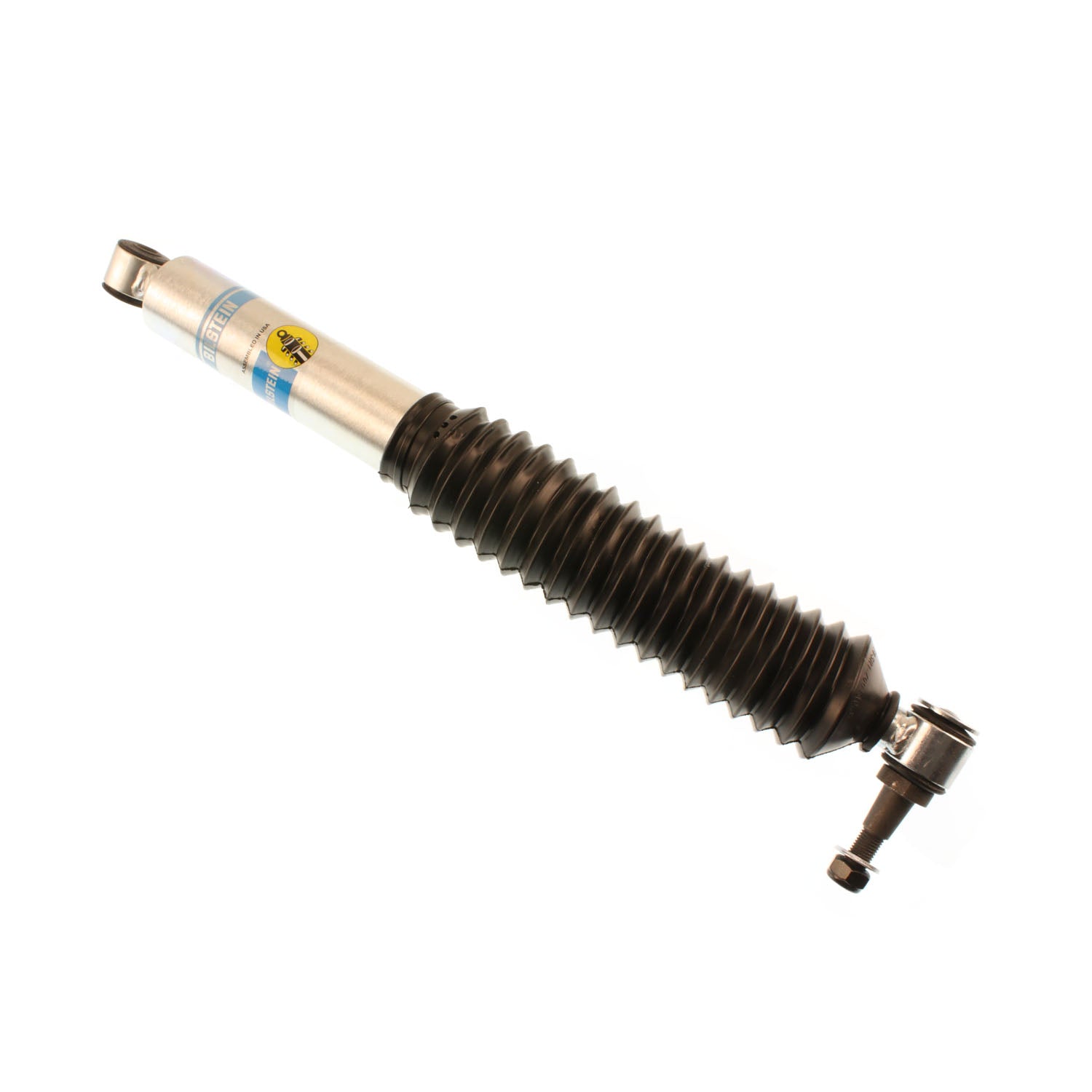
Steering feel can also change after a lift because the steering linkage now operates at a different angle. Some drivers notice more play or a different response. A damper or corrective component may help in some cases, but a shop should confirm the root cause first. Readers facing steering wander after a lift may want to look at a steering damper, such as the Bilstein B8 5100 Steering Damper for select Chevrolet and GMC trucks, though fitment should be verified first.
Lift Kit Tire Wear and Why Alignment Matters for Tire Life
Tire wear is one of the clearest signs that alignment is off after a lift. Uneven or accelerated wear often shows up as a feathered edge, heavy wear on one shoulder, or cupping across the tread.
Alignment matters for tire life because small angle errors add up fast. A few degrees of camber or toe can wear a front tire far sooner than normal.
Good alignment habits help protect your tires:
- Check tire wear every few thousand miles after a lift
- Rotate tires on schedule
- Get an alignment check after any suspension change
- Recheck if you notice new wear patterns
If you are comparing kits for a Toyota Tacoma or similar truck, look closely at how each kit handles front geometry. The Fabtech K7003 6 Inch Suspension Lift Kit is one example from our catalog; confirm fitment for your specific Tacoma year and configuration before buying.
Truck Army Tech Tip: Ask for a post-installation alignment printout that lists camber, caster, and toe readings. Keep it with your truck records. If the wear pattern changes later, you will have a baseline to compare against.
Booking Your Post-Lift Alignment and Next Steps for Your Rig
Here's a practical post-installation checklist for leveling kits and suspension lifts alike.
1. Torque check and settle. Re-check the torque on the lift components after the first short drive.
**2.
3. Pre-alignment inspection. Have the shop check ball joints, tie-rod ends, control arm bushings, and wheel bearings before measuring angles.
4. Four-wheel alignment. Ask for camber, caster, and toe readings on all four wheels, plus thrust angle.
5. Adjustment-limit review. This is the step most owners skip. Ask the technician whether any angle is maxed out.
6. Test drive and recheck. Drive at highway speed and note any pull, wander, vibration, or off-center steering wheel.
When corrective components are needed
If the alignment rack shows an angle out of range, the fix is usually one of these, each with trade-offs:
- Upper control arms: Restore caster and camber range on lifted IFS trucks and often add travel. Trade-off is added cost and, on some designs, more road noise or stiffer bushings.
- Camber/caster bolts or bushings: A lower-cost way to gain adjustment range. Trade-off is limited range, so they may not be enough on taller lifts.
- Offset ball joints: Common on solid-axle trucks to correct caster. Trade-off is that they are a wear item and must be installed correctly.
- Adjustable tie rods or a dropped pitman arm: Help correct toe and steering linkage angle on taller lifts. Trade-off is that steering geometry changes should be matched to the kit, not mixed at random.
- Steering stabilizer or damper: Can reduce kickback and wander, but treats a symptom. It does not fix an alignment angle that is out of range.
Watch out: Adding a steering damper to mask a pull or wander can hide a geometry problem that is still wearing your tires. Confirm the alignment numbers first, then decide whether a damper is the right addition.
What to expect on timing and follow-up
Alignment timing depends on the kit. A body lift generally does not require an alignment because suspension geometry is untouched. A leveling kit or suspension lift should be aligned immediately after installation and rechecked after settling. Any time you change tire size, wheel offset, or lift height, treat it as a new alignment event.
For a Silverado or Sierra running a Uniball upper control arm system, the Trailfx G40SL2 4 Inch Front and 1 3/4 Inch Rear Suspension Lift Kit is one option to compare against other kits for your truck.
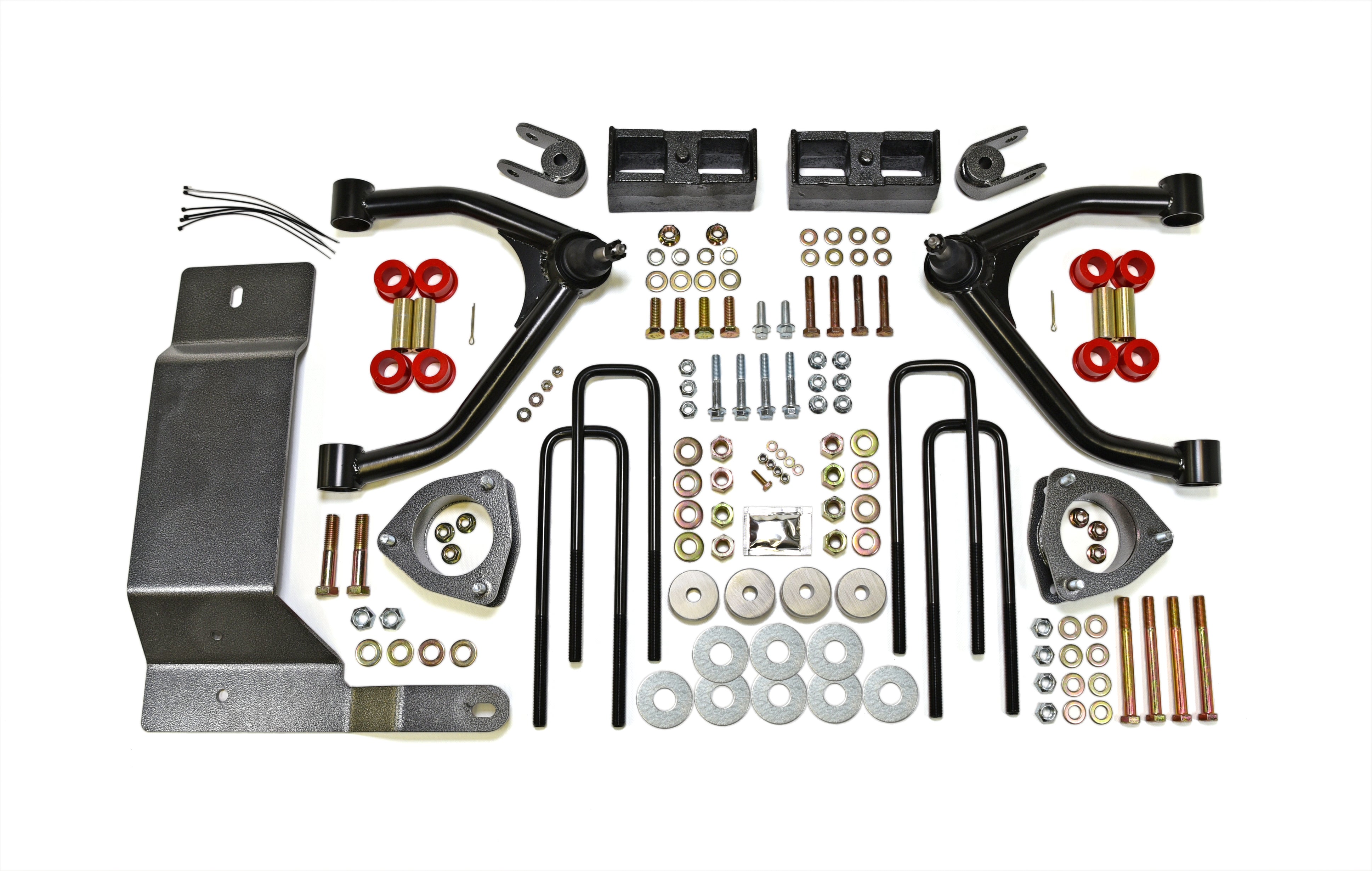
Need help confirming fitment or working out which components your rig needs? Use our vehicle fitment tool or contact a Truck Army specialist before you order.
Frequently Asked Questions
Does a lift kit affect truck alignment?
Yes. Raising the front end changes the angles that control how your wheels sit and steer, including camber, caster, and toe. Even a leveling kit can shift these angles. Lift kits that use upper control arms or spacers often change them more. Because the factory alignment was set for the stock ride height, most lifted trucks need an alignment to restore correct specifications. Check the fitment and installation notes on the product listing, since installation details vary by kit and model.
Do you need an alignment after installing a lift kit?
In most cases, yes. Per the Fabtech and Zone Offroad listings for 2019-2023 Chevrolet Silverado 1500 and GMC Sierra 1500 trucks, professional installation and alignment are recommended. Driving without an alignment can cause pulling, wandering, and uneven tire wear. Have a shop measure your angles and adjust them to the manufacturer specifications for your specific truck.
Why does my truck pull to one side after a lift?
Pulling usually points to a difference in camber or toe between the left and right sides, or to uneven tire pressure or worn components. A lift can change these angles, and a lift done without a full alignment can leave one side out of spec. Check tire pressure first, then have the alignment measured. If the pull continues after a correct alignment, inspect the installed components for binding, wear, or incorrect installation.
How soon should you get an alignment after installing a lift kit?
Get the alignment done as soon as possible after the lift is installed, before you drive the truck much. Driving on out-of-spec angles accelerates tire wear and can affect steering response and stability. Ask the shop to verify caster, camber, and toe against the factory specifications for your truck, and recheck after the first few hundred miles if handling still feels off.
