


Last Updated: November 11, 2026
Quick Summary
A leveling kit raises only the front of a truck, usually about 2 inches, to match the rear height. A lift kit raises both front and rear and changes more of the suspension. For most daily drivers, a leveling kit is the simpler fix for a nose-down stance and slightly larger tires.
- A leveling kit typically adds about 2 inches of front height only.
- A lift kit changes more of the suspension and often requires more follow-up adjustment.
- Check tire clearance at full lock, and under load if you haul heavy cargo.
- Get a professional alignment after any front-end change.
Table of Contents
- Leveling Kit vs Lift Kit: What Actually Changes
- Truck Leveling Kit Pros and Cons vs a Lift Kit
- Leveling Kit Tire Clearance and Alignment After Install
- Frequently Asked Questions
Leveling Kit vs Lift Kit: What Actually Changes
A leveling kit raises only the front, usually about 2 inches, to match the factory rear height. A lift kit raises front and rear and changes more of the suspension. For most daily drivers, a leveling kit is the simpler fix for a nose-down stance and slightly larger tires.
!Side view of a pickup on a driveway showing a modest front lift, with a mechanic's hand resting on the front fender
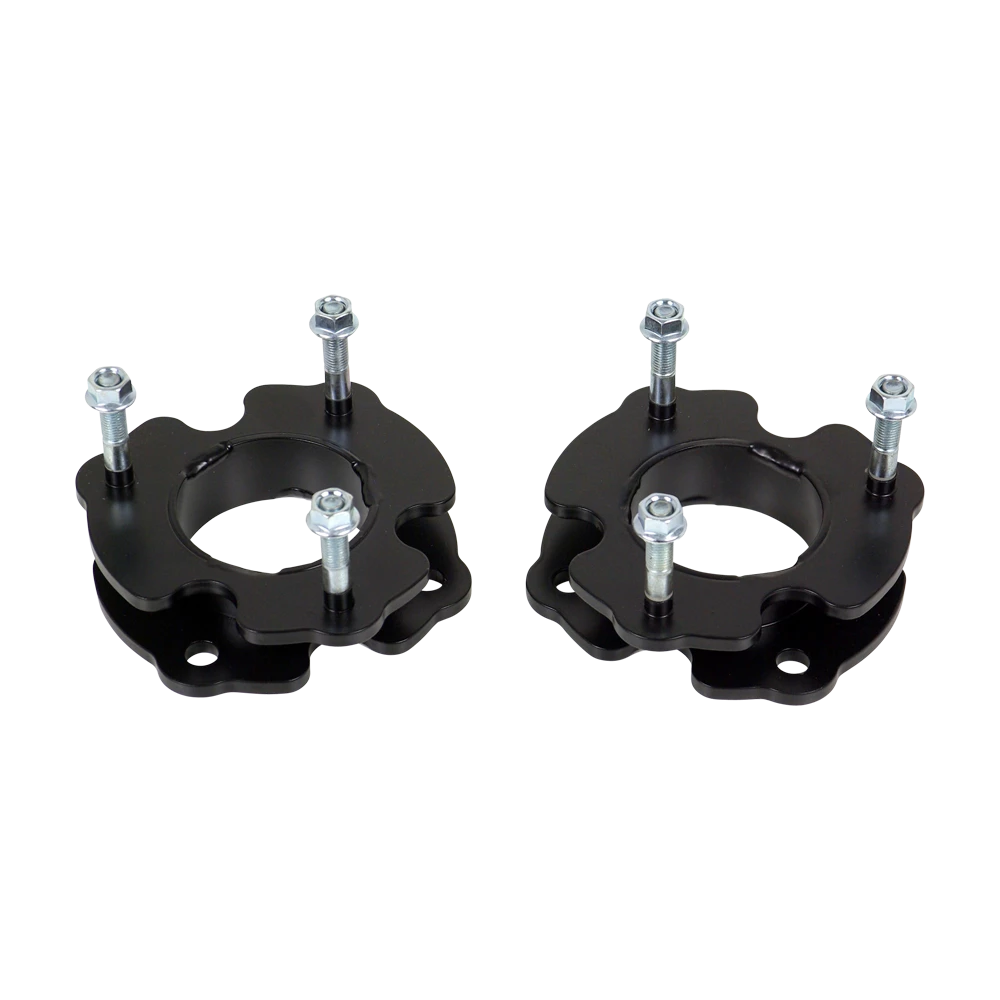
The ReadyLift 2.0" Leveling Kit for 2021-2026 Ford F-150 is a good example. Per the listing, it provides 2 inches of front lift and keeps factory ride and handling in most trim packages.
Watch out: Lift height figures vary by year, trim and configuration. Check your specific truck's factory height before ordering any kit.
The two kits differ mainly in how much of the suspension they change and where the height comes from.
| Kit type | Height change | Best for |
|---|---|---|
| Leveling kit | About 2 inches, front only | Nose-down stance and slightly larger tires on a daily driver |
| Lift kit | Front and rear, more suspension changed | Larger height gains and more aggressive builds |
Truck Leveling Kit Pros and Cons vs a Lift Kit
The real decision comes down to how each approach changes driving, load-carrying, and long-term costs.
Why a leveling kit is usually simpler. It adds front height through spacers, strut extensions, or replacement components. The rear stays put, so there is less work on driveline geometry, brake lines, and rear suspension. Components vary by kit, year, make, model, and drivetrain.
Why a lift kit changes more. A full lift raises both ends and often modifies steering geometry, driveline angles, and brake line length, which means more labor and more follow-up adjustment.
Towing, payload, and daily driving. A leveling kit leaves rear height and most rear suspension alone. If you tow or haul, check your tow rating, payload sticker, and manufacturer guidance on lift height.
Long-term ownership costs. Plan for a professional alignment after any front-end change. Lift kits can add ongoing attention to alignments and driveline or brake-line components.
Watch out: Lift height and kit design determine how much of the factory suspension changes. Verify fitment and the components a kit includes against your exact year, trim, and drivetrain before ordering.
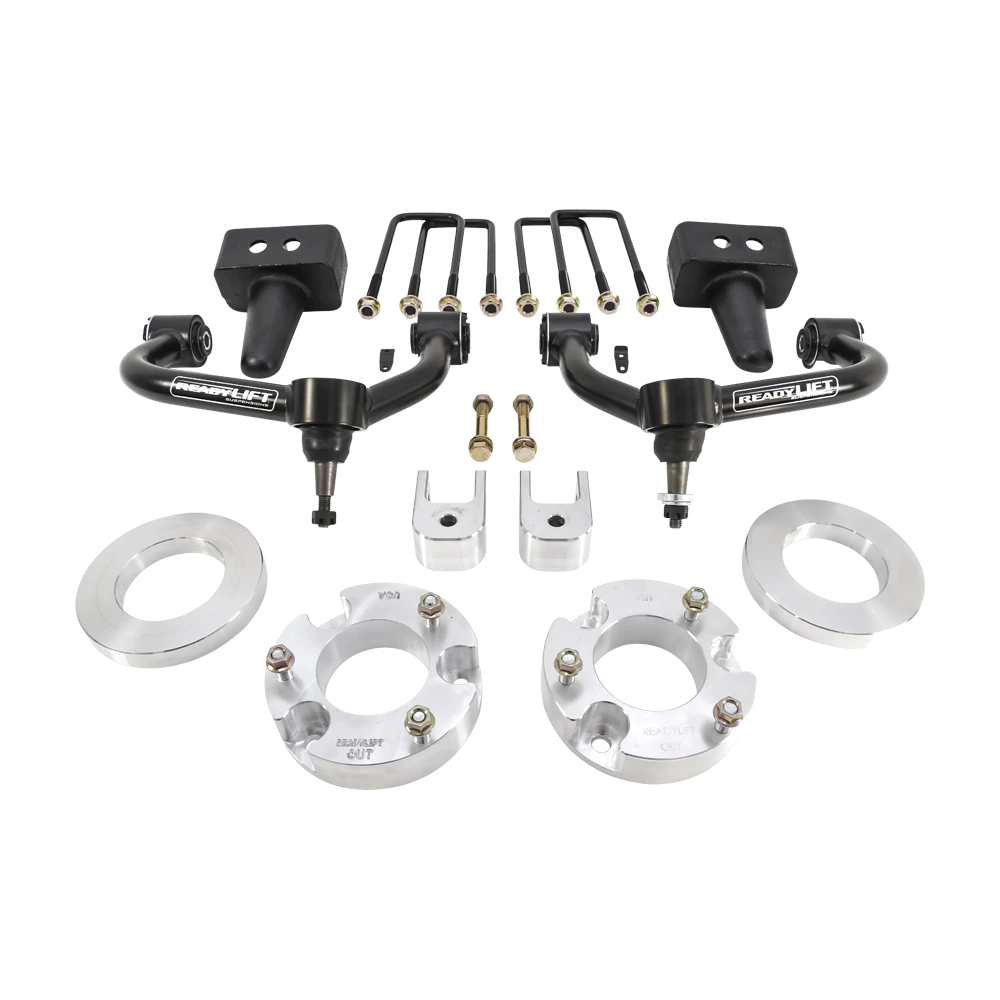
The ReadyLift 3.5" SST Lift Kit for 2021-2026 Ford F-150 4WD shows the larger scope of a full lift. Per the listing, it lifts 3.5 inches in front and about 1.26 inches in the rear. For mostly pavement and light trail use, a leveling kit usually meets the goal with fewer tradeoffs.
Leveling Kit Tire Clearance and Alignment After Install
Tire clearance is where many leveling kit projects go wrong. Wheel offset, backspacing, tire width, and sidewall height all affect whether a tire clears the fender at full lock.
Start with the wheel, not the tire. Backspacing and offset determine how far the wheel sits relative to the hub. The ReadyLift 2.0" listing states it allows up to a 295/60-20 tire on a 20x9 +18 wheel with no trimming, per the listing. Use that only when your wheel specs match exactly.
Check clearance at full lock and under load. A tire that clears at ride height can rub when you turn sharply or hit a bump. Turn the wheels fully left and right, and repeat loaded if you haul heavy cargo.
Plan for trimming and rub fixes. Learn whether an alignment is needed after installing a leveling kit before you take the truck back on the road. Some installs need minor inner liner trimming or bump stop adjustment. See the step-by-step process for installing a leveling kit on your truck to know where these adjustments come up. Trim carefully and recheck at full lock.
Alignment after any front-end change. A front-end lift changes camber, caster, and toe, so get a professional alignment once the truck has settled. Per the Zone kit listings, a post-install alignment should be checked.
Watch out: Tire size, wheel offset, and kit design interact. Confirm the combination against the listing and your truck's specifications before buying tires.
Shop All Leveling Kits
Frequently Asked Questions
Is it better to lift or level your truck?
It depends on what you want the truck to do. A leveling kit is the simpler choice if you want the front to match the rear and you plan to keep factory ride and handling. The Zone Offroad ZONF1205 and ZONF1222 are 2-inch front leveling kits for 2021-2025 Ford F-150 models, with a listed installation time of about 2.5 hours. A lift kit makes sense if you need more ground clearance or larger tires. The Fabtech K2386M offers about 4 inches of lift for 2021-2026 F-150s and is a bigger job that calls for professional installation and a post-install alignment.
Do you need an alignment after installing a leveling kit or lift kit?
Yes. Changing ride height alters suspension geometry, so an alignment is generally recommended after either a leveling kit or a lift kit. The listings call for checking alignment after installation to help maintain proper tire wear and handling. Skipping the alignment can lead to uneven tire wear.
Can a leveling kit fit larger tires?
Sometimes, but it depends on the kit, wheel size, and backspacing. The ReadyLift 2.0-inch 66-2120 is listed to allow up to a 295/60-20 tire on a 20x9 +18 wheel without trimming. The Zone Offroad ZONF1205 lists clearance for tires up to 33 x 12.5 inches, depending on wheel and tire specifications. Verify wheel, tire, and suspension clearance before installation, because the kit alone does not determine fitment.
